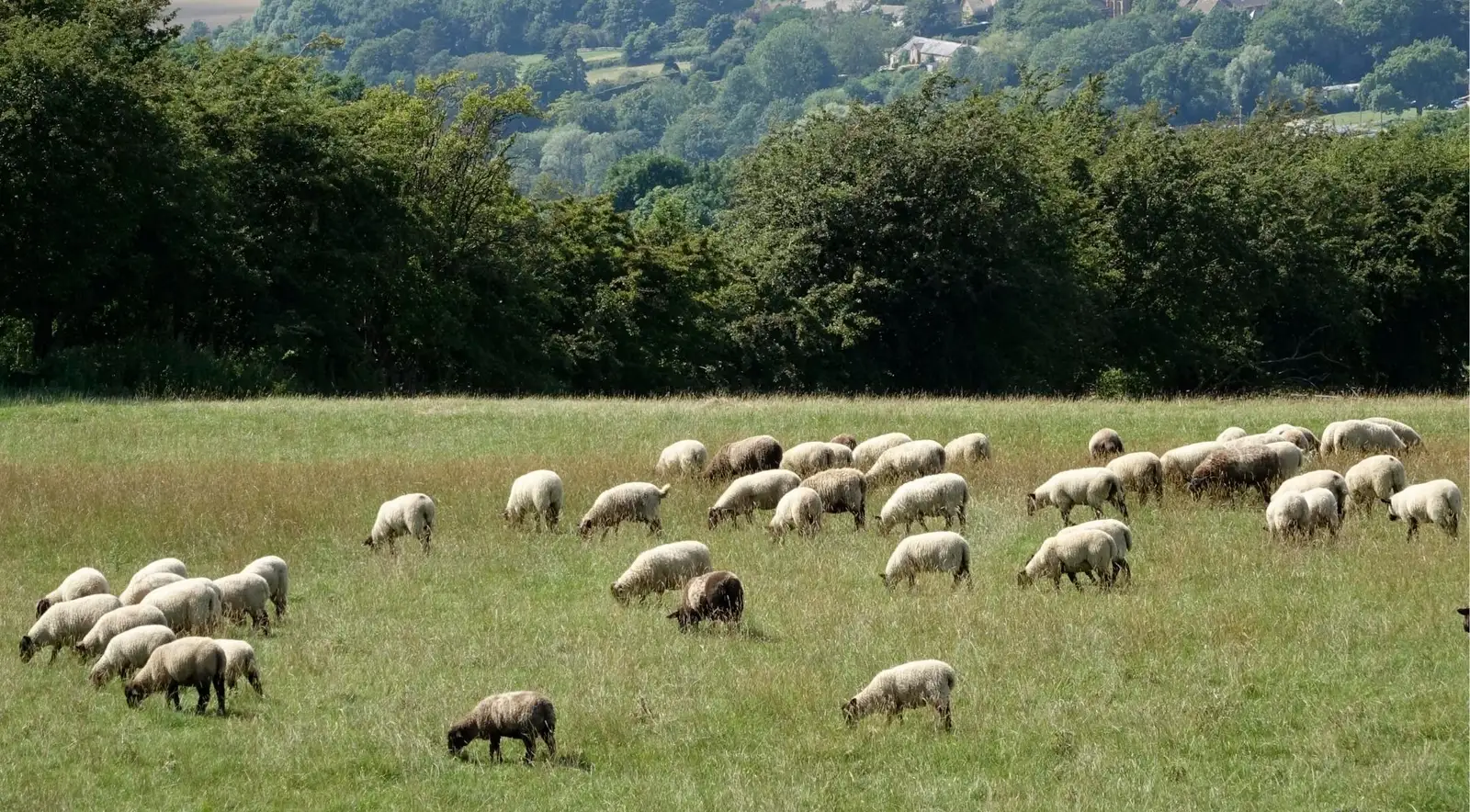
November and December in the Cotswolds are cool, wet and short on daylight, but rarely severe. Most days are grey or showery with the odd bright, frosty one, and snow that settles is uncommon before Christmas. Plan your days around the light, which goes before 4.30pm, and pack for rain and mud rather than deep cold.
- Temperatures: on the high wolds, Met Office long-term averages for Little Rissington, between Stow and Burford, are a 9.5°C high and 3.8°C low (49°F / 39°F) in November, and 6.8°C and 1.5°C (44°F / 35°F) in December. Frosts become common in December, and the lower towns run a degree or so milder.
- Rain and light: about 83–85 mm (3.3 in) of rain falls each month, spread over roughly 13 wet days. In Cheltenham the sun sets at 4.42pm on 1 November and 3.58pm in mid-December, leaving under 8 hours of daylight around the solstice. Settled snow happens, but it is rare.
- Packing in one line: a waterproof jacket (10,000 mm rating or more), waterproof boots, a merino or thermal base layer, a warm mid-layer, a hat, gloves and a head torch. Add wellies if you're walking across fields.
This page is part of our Cotswolds winter series. If you're still deciding whether to go at all, start with is the Cotswolds worth visiting in November? For the whole year, month by month, see the best time to visit the Cotswolds.
November weather in the Cotswolds
November is wet. On the high wolds it is narrowly the wettest month of the year: Little Rissington averages 85 mm (3.4 in) of rain on 13.5 days with at least 1 mm, with October (84 mm) and December (83 mm) close behind. Lower down, in Oxford, October is slightly wetter than November. In practice it means grey, drizzly mornings, a band of proper rain every few days, and the odd glorious, low-sunlit afternoon in between. An average high of 9.5°C (49°F) is fine while you're walking around a village, and much less fine at a 5pm light trail.
The first air frosts usually arrive in November, more often in sheltered valley bottoms than on the tops. The bigger change is the light. The clocks went back on 25 October 2026, and by mid-November the sun sets at about 4.20pm.
December weather in the Cotswolds
December is properly cold but rarely severe. Little Rissington averages highs of 6.8°C (44°F) and lows of 1.5°C (35°F), so frosty nights are common. Rainfall stays high at 83 mm (3.3 in) over 13 days, and the sun manages only about 63 hours in the whole month. Clear, still, frosty days are the prize: crisp mornings, honey-coloured stone and long blue shadows by 2pm. Mild, damp and windy spells are just as common.
Winter Days Out in the Cotswolds, Oxford and Bath
On a wet or short winter day, let a guide do the driving: small-group day trips from London to Bourton-on-the-Water, Stow-on-the-Wold and Bibury, Blenheim Palace at Christmas, Oxford college walking tours, Warwick Castle, or Bath and Stonehenge from London. These picks from GetYourGuide update automatically.
Cotswolds climate in November and December (Met Office averages)
Little Rissington (210 m / 689 ft): the best guide to the high wolds, Stow, Bourton and Burford.
| Month | Average high | Average low | Average rainfall | Rainy days (1 mm or more) | Sunshine |
|---|---|---|---|---|---|
| November | 9.5°C / 49°F | 3.8°C / 39°F | 85 mm / 3.36 in | 13.5 | 73 hrs |
| December | 6.8°C / 44°F | 1.5°C / 35°F | 83 mm / 3.26 in | 13.1 | 63 hrs |
Pershore (in the Vale of Evesham, just north-west of Broadway): the best guide to the lowland edges and the Severn and Avon vales.
| Month | Average high | Average low | Average rainfall | Rainy days (1 mm or more) | Sunshine |
|---|---|---|---|---|---|
| November | 10.8°C / 51°F | 4.0°C / 39°F | 64 mm / 2.54 in | 12.1 | 68 hrs |
| December | 8.2°C / 47°F | 1.8°C / 35°F | 59 mm / 2.32 in | 11.6 | 49 hrs |
What the numbers mean for your trip: the hills are about 1–1.5°C cooler by day than the vale, noticeably wetter, and more exposed to the wind. The vale is not frost-free in return. On still, clear nights cold air drains downhill and pools in the valleys, so frost can be harder in the low ground than on the tops. These are long-term averages, and recent winters have mixed record-wet spells with sharp cold snaps. For the other ten months, see our month-by-month guide to the Cotswolds.
Daylight in Cheltenham, winter 2026
| Date | Sunrise | Sunset | Daylight | Civil dusk (usable light ends) |
|---|---|---|---|---|
| 1 Nov | 07:03 | 16:42 | 9h 39m | 17:18 |
| 15 Nov | 07:28 | 16:19 | 8h 51m | 16:57 |
| 30 Nov | 07:53 | 16:03 | 8h 10m | 16:42 |
| 15 Dec | 08:10 | 15:58 | 7h 48m | 16:39 |
| 21 Dec | 08:14 | 16:00 | 7h 46m | 16:41 |
| 31 Dec | 08:17 | 16:07 | 7h 50m | 16:47 |
Moreton-in-Marsh lies slightly further east, so its times run a minute or two earlier. The earliest sunset comes around 12 December, not on the solstice. Under cloud the light is already fading by 3.30pm in December, so plan walks to finish by about 3pm.
What it feels like on the ground
Wind on the high wolds. The open plateau around Stow-on-the-Wold, the Rissingtons and the Cotswold escarpment (Cleeve Hill, Crickley Hill, Broadway Tower) has little shelter. A 6°C day with a brisk westerly feels close to freezing, so a windproof outer layer matters more than an extra jumper.
Valley fog and frost hollows. On clear, still nights, cold air sinks into the Windrush, Evenlode and Coln valleys. You can drive out of sunshine on the tops into thick, freezing fog at Bourton or Bibury, and frost can linger all day in shaded lanes.
Mud. Cotswold field paths sit on clay-rich soils that turn to sticky, slippery mud after rain, typically from November through to March. Stiles, gateways and field corners churned by cattle are the worst spots, and your walking pace will drop noticeably.
Floods. This is the weather risk visitors most often underestimate:
- Bourton-on-the-Water: the River Windrush and the River Dikler are covered by Environment Agency flood warning areas. The EA's "River Windrush from Bourton to Newbridge" flood alert was active for days in January 2024, after Storm Henk, and again in mid-December 2025, warning of flooding to low-lying land and roads. Flooding in the village centre is uncommon, but meadows, footpaths and approach lanes can go under. Cotswold District Council's flood records say the Windrush flooded over 100 homes and businesses in Naunton and Bourton in November and December 2012.
- Moreton-in-Marsh: the town council describes the town as prone to flooding in both winter and summer. The High Street and parts of Hospital Road, East Street and Croft Holm flooded in December 2020, even after most of the new flood-alleviation work had been finished; the worst flood was in summer 2007.
- Lechlade and the Upper Thames: the low-lying Thames meadows around Lechlade appear in the district's flood records, and riverside paths can be impassable after prolonged rain.
- Tewkesbury and the Severn Vale: the town sits where the Severn and the Avon meet and floods often. During Storm Henk in January 2024 the borough council recorded 22 properties flooded and 7 evacuations, with many roads closed.
Snow in the Cotswolds: will you see any?
Probably not, though it does happen. Settled snow is uncommon in a typical December across most of England, and it is more likely in January and February than before Christmas. Higher ground such as Stow, Chipping Campden and Cleeve Hill catches more than the valleys. Recent memorable falls include December 2010, one of the coldest Decembers on record in the UK, and 11 December 2022, when heavy snow fell across the Cotswolds and the Home Counties and caused some disruption. The Met Office doesn't publish a Cotswolds figure for days with snow lying, so for a classic white Christmas, keep your expectations low.
How the weather affects your plans
Walking. Choose shorter, firmer routes in wet spells: estate parkland, tracks and the escarpment tops rather than clay valley bottoms. Start by 10am and aim to finish by 3pm.
Driving. The lanes are narrow, often single-track and unlit. Gloucestershire County Council runs 29 gritters from October to April, but it salts only priority routes: A and B roads, routes to hospitals and emergency stations, and key bus routes, about 28% of the county's roads. Minor village lanes generally aren't gritted, so ice lingers there. Take particular care on steep climbs such as Fish Hill (A44) above Broadway, which Worcestershire maintains (check its gritting status before you go), Birdlip Hill and Leckhampton Hill. Work on the A417 "Missing Link" near the old Air Balloon roundabout continues into late 2026, with lane restrictions and overnight closures and completion due in 2027, so check National Highways before you travel. In ice, the Met Office's advice is to avoid driving if you can. If you must go, keep your speed down, drive smoothly, and carry warm clothing, food, a torch and a charged phone.
Buses and trains. Wind, flooding and ice cause cancellations on rural routes, and the Sunday problem gets worse in winter. Before relying on public transport, read our guide to the Cotswolds without a car in winter, which also covers the weather and daylight in December.
Light trails and markets. Most go ahead whatever the weather, except in high winds. Paths get muddy, so book early-evening slots and dress for standing still. Compare the trails in our guide to Christmas light trails in the Cotswolds, and see the Cotswolds Christmas markets 2026 for dates.
Day trips from London. Coach and minibus tours rarely cancel for rain, but fog and ice can stretch journey times. The Full-Day Cotswolds Small-Group Tour is back in London by about 5.45pm; compare it with the others in our Cotswolds day trip from London in winter guide.
Where to check forecasts and alerts
- Met Office: location forecasts for Stow, Bourton or Cheltenham, plus the UK weather warnings page for yellow and amber ice, snow, wind and rain warnings.
- BBC Weather: a useful second opinion that also uses Met Office data.
- Environment Agency "Check for flooding" (GOV.UK): search "Bourton", "Windrush", "Dikler", "Lechlade" or "Tewkesbury" for live alerts and warnings.
- National Highways: live travel updates and the A417 Missing Link scheme page for closures.
- Gloucestershire County Council: the winter gritting pages show the gritting route map, and there are road closure updates.
- Traveline: bus times and disruption.
- Your hotel or pub: a quick morning call often beats any app for local flooding.
Rainy-day ideas, November and December 2026
Winter hours change often, so reconfirm any of these before you travel.
- Corinium Museum, Cirencester: Roman mosaics. Open 10am–4pm; Sunday hours are listed differently in different places, so check. Closed 24–26 December and 1 January.
- Holst Victorian House, Cheltenham: Tuesday–Saturday 10am–4pm, Sunday 12–4pm, closed Mondays. Check its Christmas closures.
- The Wilson, Cheltenham: Tuesday–Saturday 10am–5pm, Sunday 10am–4pm, closed Mondays. The Arts and Crafts gallery has been closed for works since June 2026.
- Cotswolds Distillery, Stourton: tours of about 90 minutes run several times a day. Check the winter calendar and book ahead.
- Blenheim Palace: Christmas at Blenheim runs from 13 November 2026 to 3 January 2027, 10am–8pm, and is separately ticketed. The State Rooms are dressed as a Cinderella route with timed entry, and the Christmas market runs from 13 November to 20 December.
- Cotswold Motoring Museum, Bourton: indoor and dog-friendly. It normally opens from mid-February to early December, so check its Christmas dates.
- Chedworth Roman Villa (National Trust): mosaics under cover. Winter hours are reported as 10am–4pm in November, then closed for December and January; check before you go.
- Birdland, Bourton: open daily except 24–25 December. Winter closing is 4pm or 5pm depending on the source, and much of it is outdoors.
- Model Village, Bourton: winter hours 10am–4pm, closed on Christmas Day. It's outdoors, so bring the umbrella.
- Spas and pubs: the classic Cotswold answer to a wet afternoon is a spa hotel or a pub with a log fire.
The Cotswolds winter packing list
Outer layers
- A waterproof, breathable jacket with a hood. Look for a hydrostatic head of at least 10,000 mm, or 20,000 mm for proper all-weather use.
- Waterproof over-trousers, if you're walking.
- A packable down or synthetic insulated jacket.
Base and mid layers
- One or two merino or synthetic thermal base tops.
- A fleece or wool jumper.
- Thermal leggings for light trails.
- Quick-drying walking trousers. Avoid jeans for walks, because wet denim stays cold.
Footwear
- Waterproof walking boots with good grip.
- Wellies, if you plan field walks or you're staying in the countryside.
- Smart, comfortable, fairly waterproof shoes or ankle boots for pubs and towns.
- Wool socks, with spares.
- Gaiters (optional, and very handy in mud).
- Microspikes are rarely needed, only during a forecast hard freeze or snow.
Accessories
- A warm hat, touchscreen-friendly gloves, and a scarf or neck gaiter.
- A head torch for dusk walks and dark car parks.
- A compact umbrella for town days, though it's useless on the windy tops.
- A small daypack with a rain cover, a flask, and a power bank, because cold drains phone batteries.
- A plastic bag or boot bag for muddy footwear in the car or hotel.
- Travel insurance that covers weather disruption.
Sample outfits
- Village day (Bourton, Stow, Broadway): a thermal top, a knitted jumper, dark trousers, waterproof ankle boots, an insulated waterproof parka, a wool hat and a compact umbrella.
- Muddy walk: a merino base layer, a fleece, a waterproof shell and over-trousers, walking trousers, wool socks, boots or wellies, gaiters, gloves, and a head torch in the pack.
- Evening light trail: thermal leggings under trousers, two base layers plus a fleece, a down jacket under a waterproof shell, waterproof boots, a hat, gloves, a scarf and hand-warmers. Standing still at 2°C is colder than walking at 2°C.
- Dinner at a country pub or hotel: "country smart" is enough: a wool jumper or shirt, chinos or a dress with thick tights, and clean leather boots. Dress codes are relaxed, but bring a change of shoes, since few people want to dine in muddy boots.
Packing for kids and dogs
Kids: an all-in-one waterproof suit or waterproof trousers, wellies, two pairs of gloves (one pair will get wet), a spare full outfit in the car, a small head torch or glow stick for light trails, and snacks. Children chill faster when they're standing still.
Dogs: a waterproof coat for short-haired breeds, an old towel or a drying bag, a light-up collar for dark lanes, and a lead for fields with livestock. Check that your accommodation and the attractions you plan to visit accept dogs; the Cotswold Motoring Museum does.
A note on January and February
It gets colder after Christmas, with average highs of about 6.5–7°C (44–45°F) on the wolds and frequent frosts. January is still wet, at about 78 mm (3.1 in), while February is noticeably drier, at about 55 mm (2.2 in), and sunnier. Snow is more likely in these two months than in December, and flood alerts on the Windrush have repeatedly come in early January. Several attractions close in January, so check before booking. The best time to visit the Cotswolds covers the rest of the year, from the snowdrops onwards.
Last updated 28 October 2026. Weather averages are long-term norms, not forecasts: the climate figures are Met Office 1991–2020 station averages for Little Rissington and Pershore, and the daylight times are calculated for Cheltenham. Always check the latest Met Office forecast and Environment Agency flood information before you travel. This page contains affiliate links; if you book through them we may earn a small commission at no extra cost to you.