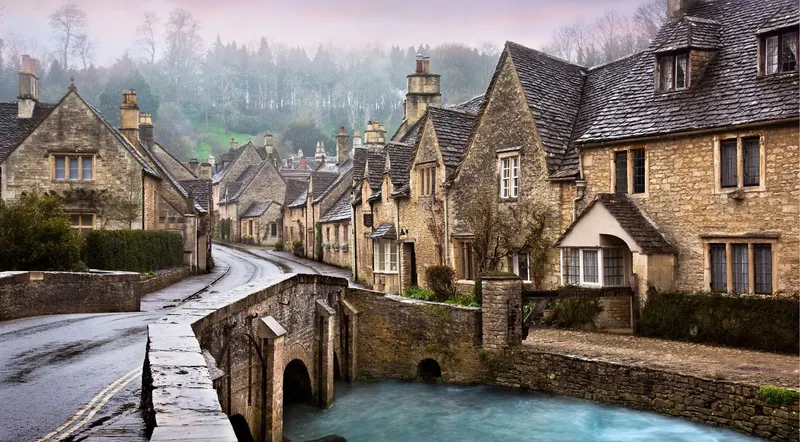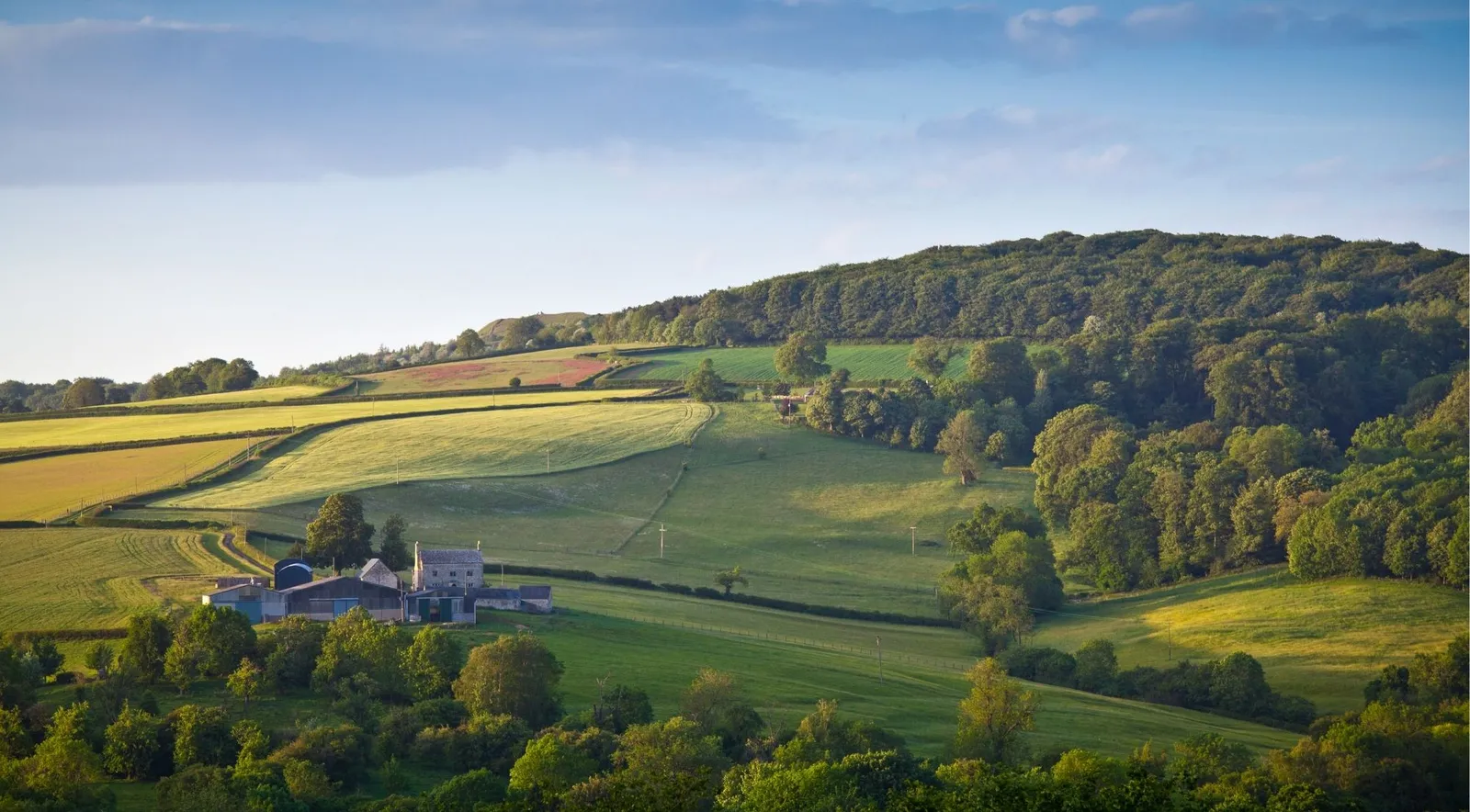
The Cotswolds can be visited year-round, and day tours from London operate in every season, although some gardens and indoor attractions have shorter winter hours. What changes most through the year is the weather, daylight and how busy the most popular villages become.
If your dates are flexible, June is the best month for a first visit. Days are close to their longest, temperatures are usually comfortable for spending all day outdoors, and the main English school summer holidays have not yet started. It also offers considerably more sunshine than September, making it a strong month for village walks, gardens and countryside views.
May is the best alternative if you prefer slightly cooler weather and fewer visitors. It has similarly good sunshine and long days, but average temperatures are a few degrees lower. July and August are warmer but busier, while from November to February the biggest limitation is daylight, with much less time for sightseeing before sunset.
What each priority points to
- Best overall, if your dates are flexible
- June
- Cooler walking weather, fewer visitors
- May
- Warmest and sunniest, but school holidays
- July
- Autumn colour at Westonbirt
- Mid-October to early November
- Fewest visitors, shortest days
- January
- Sunshine
- 198 hrs
- Rain, driest May–Sept
- 50 mm
- Average high
- 20.7 °C
- Regional hotel demand
- 79%
June in an average year, from the Met Office series for Oxford. Regional hotel demand is South West hotel occupancy, a crowd indicator for the wider region rather than a count of visitors in any one village.
Check a specific date
Pick the day you are thinking about. Within about two weeks the card shows the live forecast; beyond that it shows the long-run average for that month, and it tells you which of the two you are looking at.
- 6.6 hrsSunshine on an average June day
- 20.7 °CAverage daily high
- 50 mmRain in an average June (whole month)
- 16h 41mDaylight
- 21:28Sunset
A long day, with light until 21:28. There is time for the villages and the countryside between them. A full day among the villages is the trip this date suits.
See full-day Cotswolds village tours Sunset and daylight are calculated for Bourton-on-the-Water in UK clock time. Departures and pick-up points vary by operator, so check the tour page for the day you want.What each month is like
Temperature and rainfall come from the Met Office series for Oxford, the nearest long-running official record to the villages these tours visit, and they are checked against a second station on the western side. Daylight is calculated for Bourton-on-the-Water. The occupancy column is how full South West hotels were, averaged over the last three years. It is the closest thing to a monthly crowd count that anybody publishes for this part of England.
| Month | Average high | Rain | Sunshine | Daylight, mid-month | Regional hotel demand |
|---|---|---|---|---|---|
| January | 8.0 °C / 46 °F | 60 mm | 64 hrs | 8h 16m | 58% |
| February | 8.6 °C / 47 °F | 47 mm | 82 hrs | 9h 57m | 68% |
| March | 11.3 °C / 52 °F | 43 mm | 118 hrs | 11h 48m | 70% |
| April | 14.4 °C / 58 °F | 49 mm | 166 hrs | 13h 51m | 72% |
| May | 17.7 °C / 64 °F | 57 mm | 200 hrs | 15h 38m | 75% |
| June | 20.7 °C / 69 °F | 50 mm | 198 hrs | 16h 41m | 79% |
| July | 23.1 °C / 74 °F | 53 mm | 212 hrs | 16h 16m | 81% |
| August | 22.5 °C / 73 °F | 62 mm | 193 hrs | 14h 42m | 81% |
| September | 19.4 °C / 67 °F | 52 mm | 145 hrs | 12h 43m | 82% |
| October | 15.1 °C / 59 °F | 73 mm | 110 hrs | 10h 44m | 75% |
| November | 10.9 °C / 52 °F | 72 mm | 71 hrs | 8h 51m | 72% |
| December | 8.2 °C / 47 °F | 66 mm | 57 hrs | 7h 48m | 64% |
Rain is the total for the whole month in an average year, not a daily rate. July is the warmest month and has the most sunshine; June has the longest day.
Which trip suits your month
The month does not change which villages you see. It changes how long you have in the light, and whether you want somewhere covered in the itinerary. Three shapes of day cover almost everyone.
A long day among the villages
May to July carries the most sunshine of the year, around 200 hours a month, and the light holds well past the last stop, so nothing on the itinerary gets cut short by dusk.
Check datesVillages plus a town for the dark half
Between November and February the sun is down between 15:56 and 17:20. Adding Oxford gives the afternoon somewhere that works after the light goes, and costs the least of the three.
Check datesThe fullest village circuit
If your dates are locked and you want the maximum number of villages whatever the weather does, a seven-stop itinerary spreads the day across more places, so one wet hour costs you less.
Check datesPrices are the lowest available at the time of writing and move with the date and the season, so the booking page is the truth. A private car with a driver is the other option to know about: it costs several times more, but it is the only format that lets you chase a bloom or turn a wet morning into a different afternoon. Our comparison of the Cotswolds day trips goes through the formats in detail.
Other Cotswolds and Oxford experiences
Beyond the village day trips, there are walking tours in Bath, punting in Oxford, and Stratford-upon-Avon add-ons that pair with a Cotswolds day. These picks from GetYourGuide update automatically.
The Cotswolds month by month
This is the part the table cannot carry. The villages look much the same in every month; the countryside around them does not, and four or five things happen on a fixed calendar that somebody official publishes.
January and February. The quietest weeks of the year and the shortest. Then the snowdrops arrive: Colesbourne Park opens its gardens every Saturday and Sunday from the end of January to the end of February, gates at 11am, and there are hundreds of named varieties in the woodland there. Painswick Rococo Garden carpets its slopes at the same time. Mid-February gives you just under ten hours of light, which is enough for two villages and a garden and not much else.
March and April. March is the driest month of the year on the record, at about 43 mm, and still quiet. April is when the woods turn: the Woodland Trust puts the average first flowering of bluebells in the UK at 9 April, and southern England is usually first, so the beech woods around Painswick and above Chipping Campden are at their best from mid-April into early May. Lambs are in the fields, the hedges come into leaf, and daylight passes thirteen hours.
May and June. Hawthorn blossom in the hedges, then the meadows. May gets around 200 hours of sunshine, more than any month except July, and June has the longest days. Cotswold Lavender at Snowshill opens on 11 June and publishes its peak flowering as 27 June to 22 July, so a June trip catches the beginning of it and a July trip the full fields. Neither month is inside the school holidays.
July and August. The warmest weeks, and the busiest at the honeypot villages, because the school summer holidays run from late July to the end of August (21 July to 31 August in 2026). August is also the wettest of the summer months at about 62 mm. The lavender is cut from late July and the fields close on 5 August. This is the stretch where arriving early matters most.
September and October. September stays mild, at about 19 °C, and the light gets low and warm. October is the wettest month of the year, at about 73 mm. It also carries the strongest single reason to come: the Japanese maples at Westonbirt, the national arboretum near Tetbury, colour from around mid-October into November, and Forestry England asks visitors to pre-book from late September onwards because of it.
November and December. The light goes early, at 16:18 in mid-November and 15:56 in mid-December, and some indoor attractions wind down with it. Snowshill Manor drops its last admission to the house to 13:30 through November and then shuts for the winter, so check any specific house before you travel. What replaces them is the Christmas half: Bourton-on-the-Water lights its tree standing in the River Windrush on the last Friday in November, Westonbirt runs its illuminated trail from 27 November, and the market towns put on Christmas markets through December.
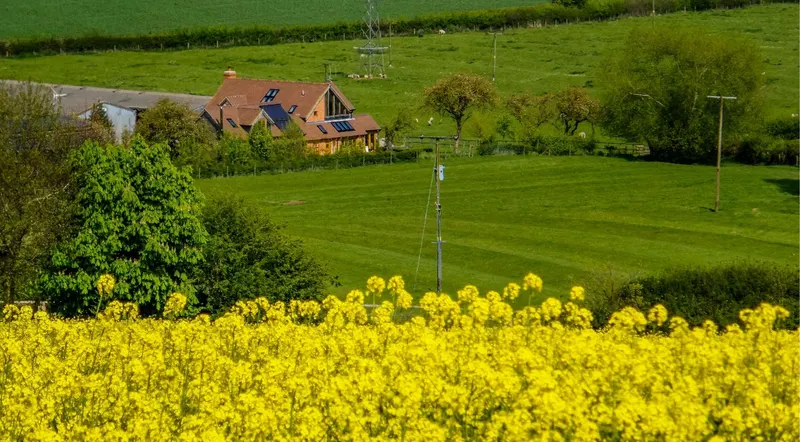
How busy does it actually get?
Almost every guide to the Cotswolds says the crowds thin in September. The measurement says something different. Hotel room occupancy across the South West averages 82% in September over the last three years, the highest reading of the twelve months, a shade above July at 81% and August at 81%. January is the emptiest month at 58%. So on regional demand, September is not the quiet month it is usually sold as.
Two things reconcile that with what people experience. The first is that what ends in early September is the school holidays, and school holidays drive day visitors, not hotel nights. The Gloucestershire summer break ends on 31 August, and the day-trip pressure at the famous villages drops with it even though the region stays full. The second is that the pressure is concentrated in a handful of places rather than spread across the area. The Cotswolds National Landscape's own management plan puts it plainly: the distribution of tourism activity is very uneven, with honeypot areas taking the impact of very high tourism while other communities would benefit from more of it.
Bibury is the sharpest example. A Gloucestershire County Council traffic survey in July recorded more than 4,500 vehicle movements across Swan Bridge in a single day, in a village of a few hundred people, and the council has since redesigned the coach arrangements in the centre. That is not a September problem or a June problem. It is a honeypot problem, and the mechanism is the same in every month: the London coaches make their village stops between roughly ten and five, so the middle of the day is when the centre of Bibury or Bourton is fullest. An early departure puts you in the first village ahead of most of them.
One caveat on the occupancy figure, because it is doing a lot of work here. It measures how full hotels were across the whole South West, which is a much bigger area than the Cotswolds and includes Cornwall and Devon. It counts people sleeping in hotel rooms, not people standing in Bourton-on-the-Water. It is a proxy for regional pressure and the best one published; it is not a headcount.
What the rainfall figure means
The numbers in the table are a total for the whole month in an average year. They are not a daily rate, they are not a forecast, and they say nothing about how many days were wet. A month with one long storm and a month with three weeks of drizzle can total the same.
What they are good for is comparing months against each other. October at about 73 mm takes roughly half as much again as June at about 50 mm, so wet weather is a bigger part of what October is. That is all the figure supports. It does not mean it rains half as often again, or that your particular Tuesday in October will be wet, and the record does not contain the figures that would let anyone say so.
The spread is also narrow. The driest month averages 43 mm and the wettest 73 mm, which is a real difference but not the difference between a dry season and a wet one. There is no month here in which you can leave the waterproof at home, and the two stations agree on that.
Daylight and the London day trip
Daylight is the constraint people underestimate. It is also the one thing about a Cotswolds day trip that is fixed and knowable years ahead. A coach leaves central London somewhere around eight in the morning and the villages are two hours away, so the useful part of the day is what is left after the driving.
In mid-June the sun sets at 21:28 and you get 16 hours 41 minutes of light. In mid-December it sets at 15:56 and you get 7 hours 48 minutes, less than half as much. From about March to October that gap makes little practical difference to a guided trip: a coach that leaves London around eight and is back by eight in the evening does its stops between roughly ten and five, and the sun is up for all of it. From November to February it becomes the main limitation. Sunset falls between 15:56 and 17:20, which leaves much less time for village stops and countryside views before the light goes. That is why the trips pairing two or three villages with Oxford work better in those months, and why a full seven-stop circuit belongs to spring and summer.
Mid-September, at 12 hours 43 minutes and a 19:24 sunset, still covers a full day trip end to end. What separates it from June is not the length of the day but how much of it is sunny: about 145 hours of sunshine in an average September against 198 in June. For the practical side of getting there and back, see our guide to Cotswolds day trips from London.
Which villages suit which season
A village that is a pleasure in February can be difficult in August, so pair the choice to the calendar.
In spring, Chipping Campden, where blossom softens the long curving High Street, and the woods at Dover's Hill above it for the bluebells. Bourton-on-the-Water is genuinely lovely before the summer arrives.
In summer, the strongest advice is to keep Bibury and Bourton for a weekday morning and go elsewhere on a weekend. Snowshill, with its Arts and Crafts manor and the lavender fields above it; Minster Lovell; and the two Slaughters, linked by a riverside path the coaches do not reach.
In autumn, Painswick, whose churchyard is famous for its clipped yews, and Westonbirt for the maples. Add Stow-on-the-Wold for its antiques shops and Burford for the steep High Street, both of which are good in low October light.
In winter, Bibury in frost before nine in the morning is as good as the Cotswolds gets, and empty at that hour in January. Bourton-on-the-Water has the riverside lights from the end of November, and Chipping Campden and Moreton-in-Marsh carry the Christmas market atmosphere.