Bath, inscribed in 1987, and Stonehenge, inscribed in 1986, sit neatly along the same south-westerly route out of the capital, which makes a combined visit feel less like a compromise and more like a curated journey through time. The contrast is extraordinary: a Georgian city of honey-stone crescents built over Roman engineering, then a circle of prehistoric stones that has drawn people for some 4,500 years. Few experiences compress so much of England's story into so few hours, and a well-run Bath and Stonehenge day trip from London is designed to give each site the time it deserves.
Why Bath and Stonehenge make the perfect day trip from London
Three things make this pairing the standout choice among the best day trips from London. The first is the UNESCO double-header: no other day trip from the capital lets you visit two World Heritage Sites in a single outing. The second is geography — both sites lie along the same south-westerly corridor, with Bath around 115 miles west of London and Stonehenge roughly 90 miles, sitting between the two, so Stonehenge becomes a natural stop on the way back rather than a detour. The third is the sheer span of human ambition you witness in one day: the Neolithic people who raised Stonehenge and the Georgian society that built Bath are separated by nearly 4,500 years, yet both created something of outstanding universal value in this same green corner of England.
More UNESCO and Day Trips from London
Bath and Stonehenge sit alongside England's other great escapes. Look at Bath and Stonehenge day trips, a Windsor Castle and Stonehenge royal day, Oxford and the Cotswolds villages of Bibury and Bourton-on-the-Water, and the Harry Potter Warner Bros. Studio Tour. These picks from GetYourGuide update automatically.
Bath — England's Georgian masterpiece
Bath is the only city in England to be inscribed as a UNESCO World Heritage Site in its entirety, listed in 1987 for its Roman remains, hot springs, Georgian architecture and town planning. In 2021 it earned a second listing as one of the Great Spa Towns of Europe — a rare double distinction. It sits in a natural bowl of steep hills carved by the River Avon, about 115 miles west of London and a little under an hour and a half by direct train from London Paddington to Bath Spa. The whole city is built of honey-coloured Bath stone that glows in afternoon light, and it is wonderfully compact: nearly every major sight sits within a fifteen-minute walk.
The Roman Baths
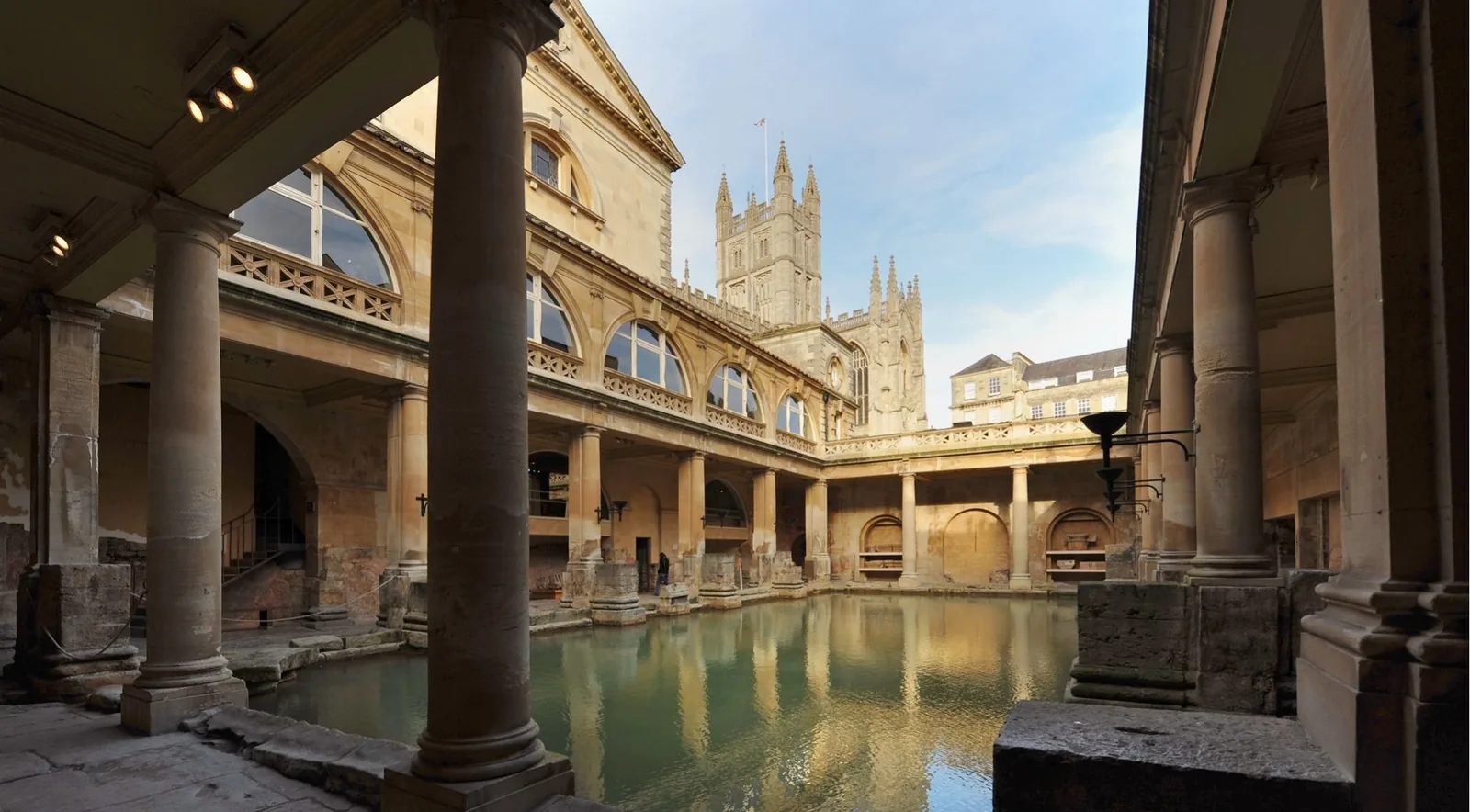
Bath owes its existence to the only naturally occurring hot spring in Britain. Every day, more than 1,170,000 litres of mineral-rich water rise here at a constant 46°C, bubbling up from rain that fell on the Mendip Hills. The Romans arrived in the first century AD and built a bathing complex and a temple to Sulis Minerva, calling the town Aquae Sulis. The centrepiece is the Great Bath, lined with Mendip lead and filled with steaming water that today reads an atmospheric green, open to the sky. The visitor experience is immersive — a museum, costumed characters, projections and the haunting Roman curse tablets. Book in advance, as timed entry sells out in summer. Note that you cannot bathe in the Roman Baths themselves; for that, head to the nearby Thermae Bath Spa.
The Royal Crescent & Pulteney Bridge
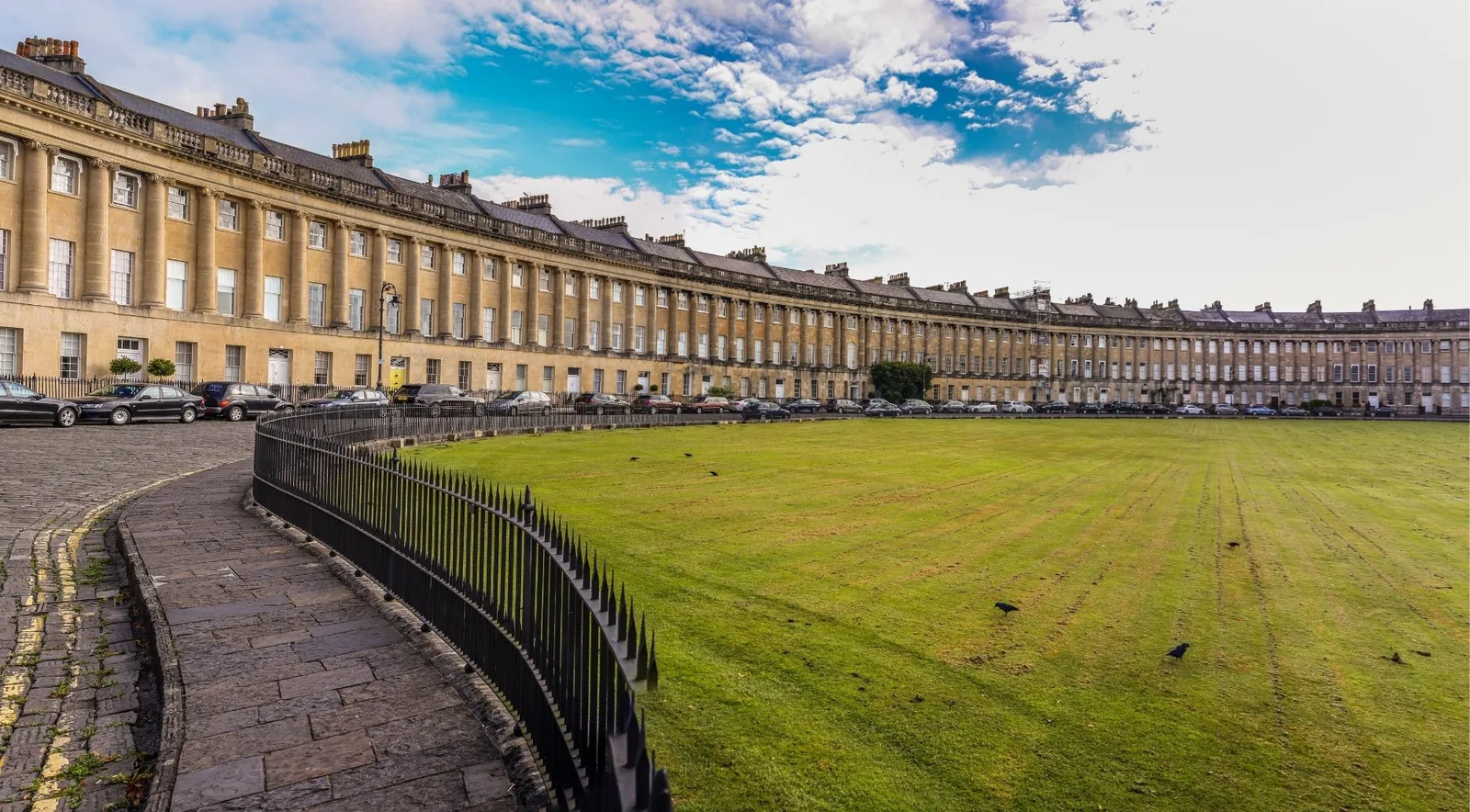
Built between 1767 and 1775 to the design of John Wood the Younger, the Royal Crescent is a majestic sweep of thirty terraced houses, its unified façade stretching some 150 metres in a perfect arc fronted by 114 giant Ionic columns. Number 1 Royal Crescent is preserved as a museum of Georgian life. A short walk away, the Circus is a circular arrangement of 33 houses begun in 1754 by John Wood the Elder. Completed in 1774 to a design by Robert Adam, Pulteney Bridge is one of only four bridges in the world with shops built across its full span on both sides — a distinction it shares with Florence's Ponte Vecchio — and immediately below it the Avon spills over a graceful horseshoe weir.
Jane Austen's Bath & the Abbey
Jane Austen lived in Bath from 1801 to 1806 and set substantial parts of Northanger Abbey and Persuasion here; the Jane Austen Centre on Gay Street celebrates her years in the city, while the Pump Room beside the Roman Baths was the social heart of Regency Bath. Bath Abbey, begun in 1499, is one of the West Country's finest examples of Perpendicular Gothic, celebrated for its fan vaulting and its west front of stone angels climbing ladders to heaven. Nearby, Sally Lunn's Historic Eating House occupies one of the oldest houses in Bath, the traditional home of the Sally Lunn bun.
Stonehenge — the prehistoric counterpoint
After the proportioned elegance of Georgian Bath, Stonehenge lands with the force of pure mystery. You leave a city built to be understood — every column placed by reason — and within the hour you stand before stones raised before writing existed. That contrast is the emotional heart of this day, and it is felt most keenly when Stonehenge comes second, on the way home.
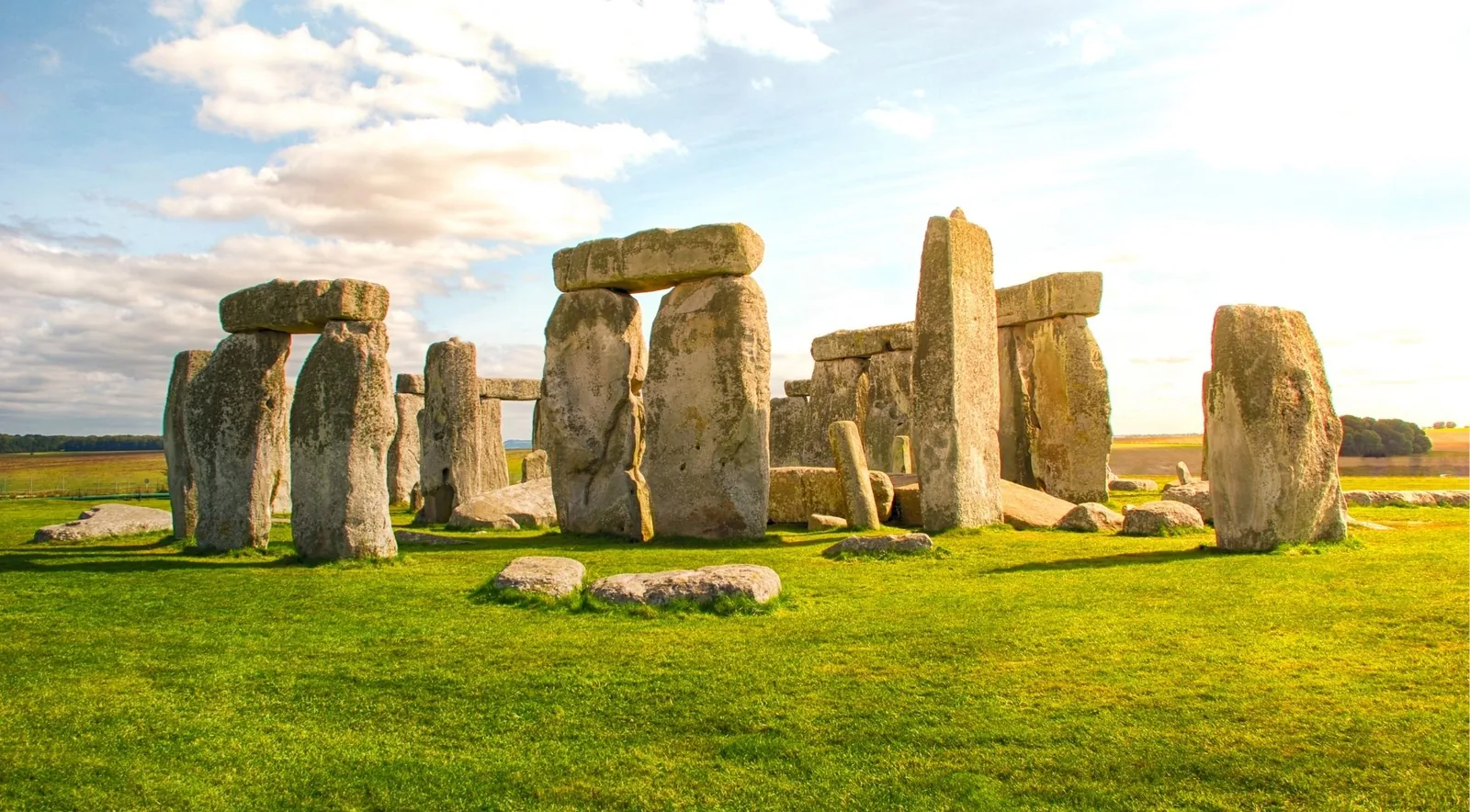
The geography is on your side: Stonehenge sits 34 miles east of Bath, around 49 minutes by road, which makes it a natural stop on the route back to London. Most visits last around an hour and a half to two hours — enough to take in the visitor centre and walk the circuit around the monument itself. It is only when you are there that the scale registers: the sarsen outer circle, the great trilithon horseshoe, the smaller bluestones carried from the Preseli Hills of south-west Wales, and the solitary Heel Stone standing apart all settle into something genuinely awe-inducing. For the full archaeological story — the construction phases, the engineering, the UNESCO status — see our Windsor and Stonehenge day trip guide.
Bath and Stonehenge — how the day flows
A well-run day has a natural rhythm. You depart London in the morning and head south-west, reaching Bath in around two hours. Arriving mid-morning gives you the best of the city before the afternoon crowds: the Roman Baths, the Royal Crescent and the Circus, Pulteney Bridge and the weir, with time for lunch in between. By early-to-mid afternoon you leave Bath and drive the short fifty-minute hop to Stonehenge, where an hour and a half to two hours on site is ample. From there it is roughly two to two and a half hours back to London, putting you home by early-to-mid evening.
Why go guided rather than attempt this independently? Three practical reasons. Bath has extremely limited central parking and a charging Clean Air Zone. Stonehenge operates strict timed entry that must be pre-booked. And stitching the two together by public transport is genuinely awkward — there is no quick direct link between Bath and Stonehenge.
Small-group or private — choosing your tour style
Small-group tours are sociable and excellent value: you travel by comfortable coach or minibus with an expert guide and a modest group capped at around sixteen — the natural choice for solo travellers, couples and anyone who enjoys a little company and commentary along the way. A private car-and-driver tour is a different proposition entirely: door-to-door, flexible and shaped around you. Because the day is yours, you can linger longer over the Roman Baths, build in afternoon tea, or spend extra time at the stones.
Practical tips for your Bath and Stonehenge day trip
Book the Roman Baths in advance — entry is timed and sells out in high summer — and remember Stonehenge must also be pre-booked for a timed slot. Wear comfortable shoes, as Bath's streets are steep and cobbled in places, and dress in layers, because Stonehenge stands fully exposed on Salisbury Plain. Photography is permitted at both sites. As for timing across the year: spring and autumn are ideal; summer is busy but vibrant; and winter has a particular magic, because the Bath Christmas Market — running from late November to mid-December — transforms the streets around the Abbey into one of the most atmospheric festive scenes in the country. If you'd like to fold the countryside in too, some tours pair these two sites with a Cotswolds village — see our Cotswolds day trips from London guide.