The closeness is the magic of an Oxford day trip from London: you can wake up in the city and be wandering past medieval quadrangles by mid-morning. Oxford tours from London come in three formats — small-group coach and minibus tours, private car-and-driver tours, and guided walking tours — so you can choose the pace and style that suits you. Whether you're a history lover, a literary pilgrim, a Harry Potter fan or simply after a memorable day out, there's a way to do it well. Below you'll find how far Oxford is, how to get there, what to see in a day, and why pairing it with the Cotswolds is, for many visitors, the finest day out in England.
Is an Oxford day trip from London worth it?
Yes — Oxford is one of the most rewarding day trips from London. The city is compact and very walkable, so a single day genuinely covers the highlights: the Bodleian Library, Radcliffe Camera, Christ Church and the Covered Market all sit within a few minutes' walk of one another. A quick word on expectations: not every college is open to visitors every day, and some — Christ Church among them — charge entry and keep specific hours, so it pays to check before you travel (or let a guide handle it). That caveat aside, Oxford suits almost everyone: solo travellers and couples love the walkable depth of history; families find plenty to keep children engaged; Harry Potter fans, history buffs and literary pilgrims all find their corner of the city.
More Day Trips and Tours from London
Oxford pairs beautifully with the rest of England's great escapes. Look at Oxford and Cotswolds day trips, Cotswolds village tours to Bibury and Bourton-on-the-Water, a Harry Potter Warner Bros. Studio Tour, and Stratford-upon-Avon and Blenheim Palace day trips. These picks from GetYourGuide update automatically.
How far is Oxford from London?
Oxford is approximately 60 miles north-west of London. By rail, the fastest direct trains from London Paddington take about 55 minutes on Great Western Railway services — the fastest is just 52 minutes — while services via Didcot Parkway take around 1 hour to 1 hour 10 minutes. By road, the drive is roughly 1.5 hours via the M40, traffic permitting. Oxford is also served from London Marylebone by Chiltern Railways, with two trains an hour. The great advantage for day-trippers is frequency: GWR runs up to 168 trains a day from Paddington, departing almost every 15 minutes on weekdays — which makes this one of the easiest rail day trips from London.
Getting to Oxford from London
There are four main ways to make the trip — and each suits a different kind of traveller.
By small-group coach or minibus
A small-group coach or minibus tour takes the logistics off your hands entirely. You're collected from central London, enjoy expert commentary along the way, and arrive without the headache of parking — which in Oxford's city centre is notoriously difficult and expensive. These Oxford coach trips are popular and seats fill quickly, particularly in summer and at weekends, so it's worth booking ahead.
By private car and driver
A private car-and-driver tour is ideal for families or groups who want flexibility. You get a bespoke pickup from your London hotel or a central address, no parking worries, and the freedom to shape the day around your interests — including the option to combine Oxford with an afternoon in the Cotswolds. It's the most comfortable and personal way to do it.
By train
If you prefer to travel independently, the train is excellent. Frequent direct services run from London Paddington, with the fastest reaching Oxford in around 52–55 minutes. From Oxford station it's roughly a 15-minute walk into the historic centre. Arriving by train and joining a guided walking tour at the other end is a great combination for independent travellers who want depth without the driving — an alumni-guided walk unlocks the colleges and the stories a guidebook never quite manages.
What to see on an Oxford day trip
Oxford's highlights concentrate in a compact city centre, so you can see a remarkable amount in a single day on foot.
The Bodleian Library
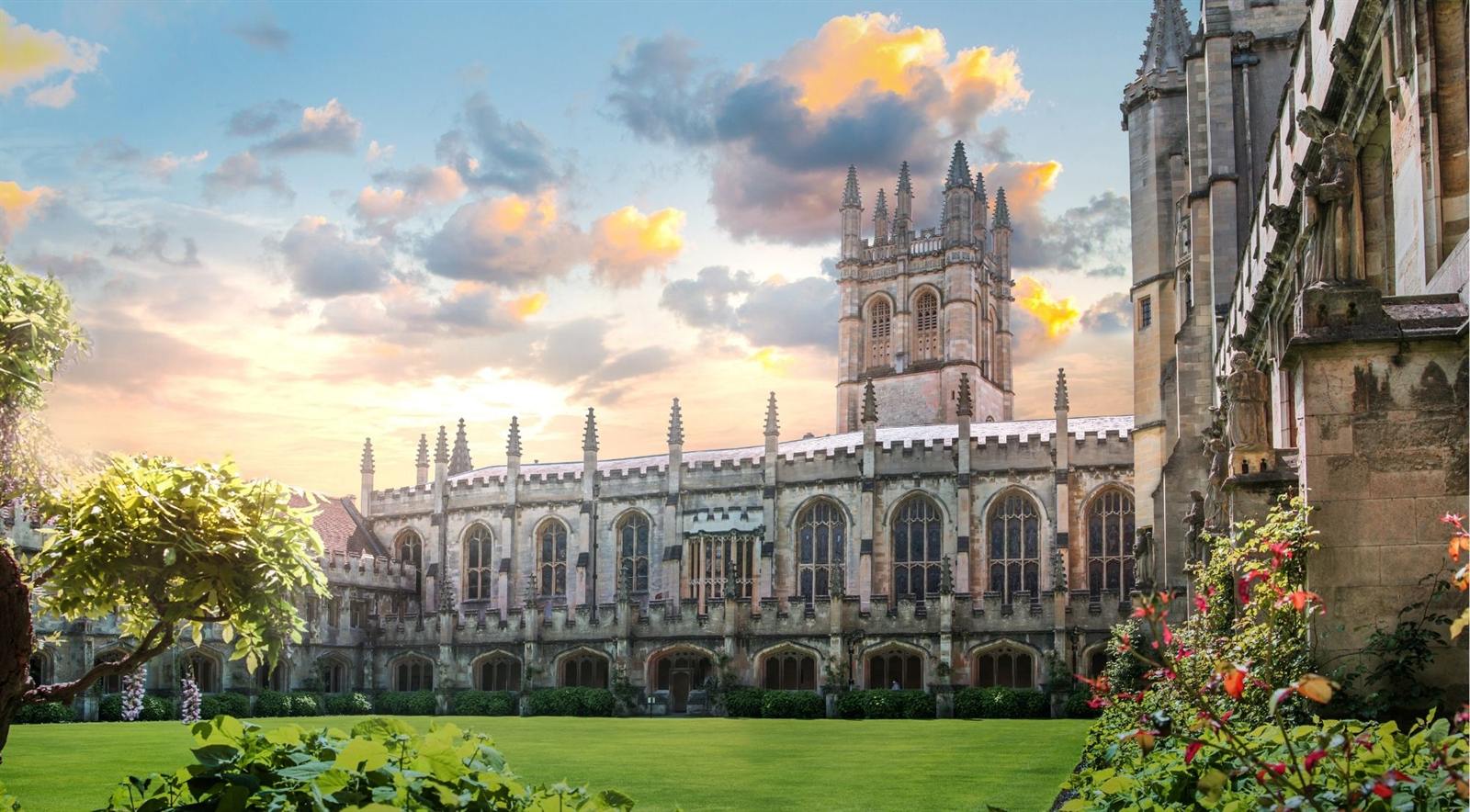
The Bodleian Library is one of the oldest and most famous libraries in Europe, founded by Sir Thomas Bodley and formally opened on 8 November 1602; the Bodleian Libraries collectively hold over 13 million printed items. Beneath it lies the medieval Divinity School (built c.1427–1483), the oldest purpose-built university building in Oxford, with a breathtaking vaulted ceiling — Harry Potter fans will recognise it as the Hogwarts hospital wing. Interior access is by guided tour or ticket, and these should be booked in advance.
Radcliffe Camera
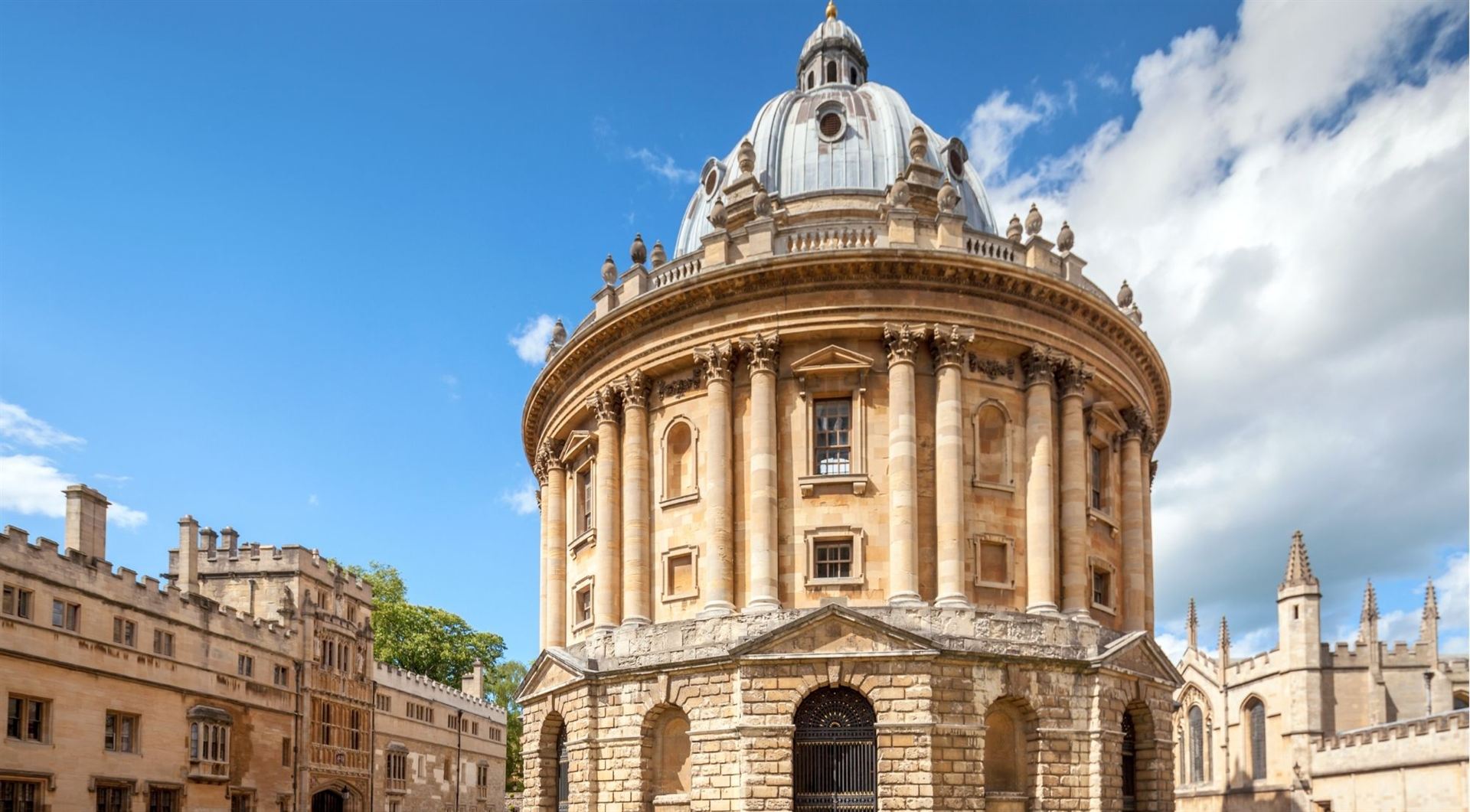
The Radcliffe Camera is the circular, domed reading room built between 1737 and 1749 to a design by James Gibbs ("camera" is simply Latin for "room"). It is one of the most photographed buildings in Oxford, and the square around it — framed by the Bodleian, St Mary's Church and the All Souls and Brasenose colleges — is the beating heart of the city.
Christ Church College
Christ Church was founded in 1525 by Cardinal Thomas Wolsey and refounded in 1546 by Henry VIII. It is uniquely both an Oxford college and the seat of Christ Church Cathedral. The Great Hall directly inspired the Hogwarts Great Hall in the Harry Potter films, and the fan-vaulted staircase leading up to it appears on screen too. Christ Church charges entry and keeps specific opening hours, so check before travelling.
The Covered Market & punting
The Covered Market, opened on 1 November 1774, is home to over 50 specialist independent traders — the perfect place for a coffee, a proper Oxford breakfast or a distinctive gift. For a quintessential Oxford experience, hire a punt at the Magdalen Bridge Boathouse, where the River Cherwell winds past Magdalen's deer park; a guided punt typically lasts around an hour and is best in spring and summer. There's far more to see, too — Magdalen College, the Ashmolean (the world's first university museum, opened 1683), the Sheldonian Theatre and the Bridge of Sighs.
Oxford and the Cotswolds — the perfect combination
Oxford and the Cotswolds are natural partners, and pairing them makes for what many visitors call their favourite trip in England. Geographically they sit side by side: Oxford lies right on the eastern doorstep of the Cotswolds, with the edge of the National Landscape beginning about 15–20 miles west of the city centre. By road, Burford — the "gateway to the Cotswolds" — is just 19 miles west of Oxford; by rail, Oxford has direct trains to Charlbury, on the edge of the Oxfordshire Cotswolds, in around 15–18 minutes.
A combined day flows beautifully: morning in Oxford, lunch in Burford, afternoon in the Cotswolds, back to London by early evening. A guided tour is the smartest way to do this combination, because the logistics of parking, timing and getting between the two areas are fiddly by public transport but completely seamless on a private or small-group tour. For more on the countryside half of the day, see our guide to Cotswolds day trips from London.
Oxford for Harry Potter fans
Oxford is one of the most rewarding cities in England for Harry Potter fans. Christ Church College is the heart of it: its Great Hall inspired the Hogwarts Great Hall, and the college's fan-vaulted staircase appears in the films. Over at New College, the medieval cloisters featured in Goblet of Fire. Inside the Bodleian, the Divinity School served as the Hogwarts infirmary, while Duke Humfrey's Library became the restricted section of the Hogwarts library. A walking tour with a film-locations guide brings all of this to life. Fans often also combine Oxford with the Warner Bros. Studio Tour in Leavesden — you'll find that and more in our roundup of the best day trips from London.
When is the best time to visit Oxford?
Oxford is a year-round destination. Spring (April–May) brings beautiful blossom to the college gardens and fewer crowds than peak summer. Summer (June–August) is the busiest and most vibrant time — book ahead. Autumn (September–October) is wonderful: golden light, the city refilling with students, and an atmospheric buzz. Winter (November–March) is quiet, atmospheric and cosy. One college-specific note: some colleges close to visitors during exam season, from late May to mid-June — a guide will know what's open. Oxford city centre has very limited and expensive parking, so if you're not on a guided tour, arriving by train and walking into the centre is strongly recommended. If you're timing the countryside half of your trip too, see our guide to the best time to visit the Cotswolds.