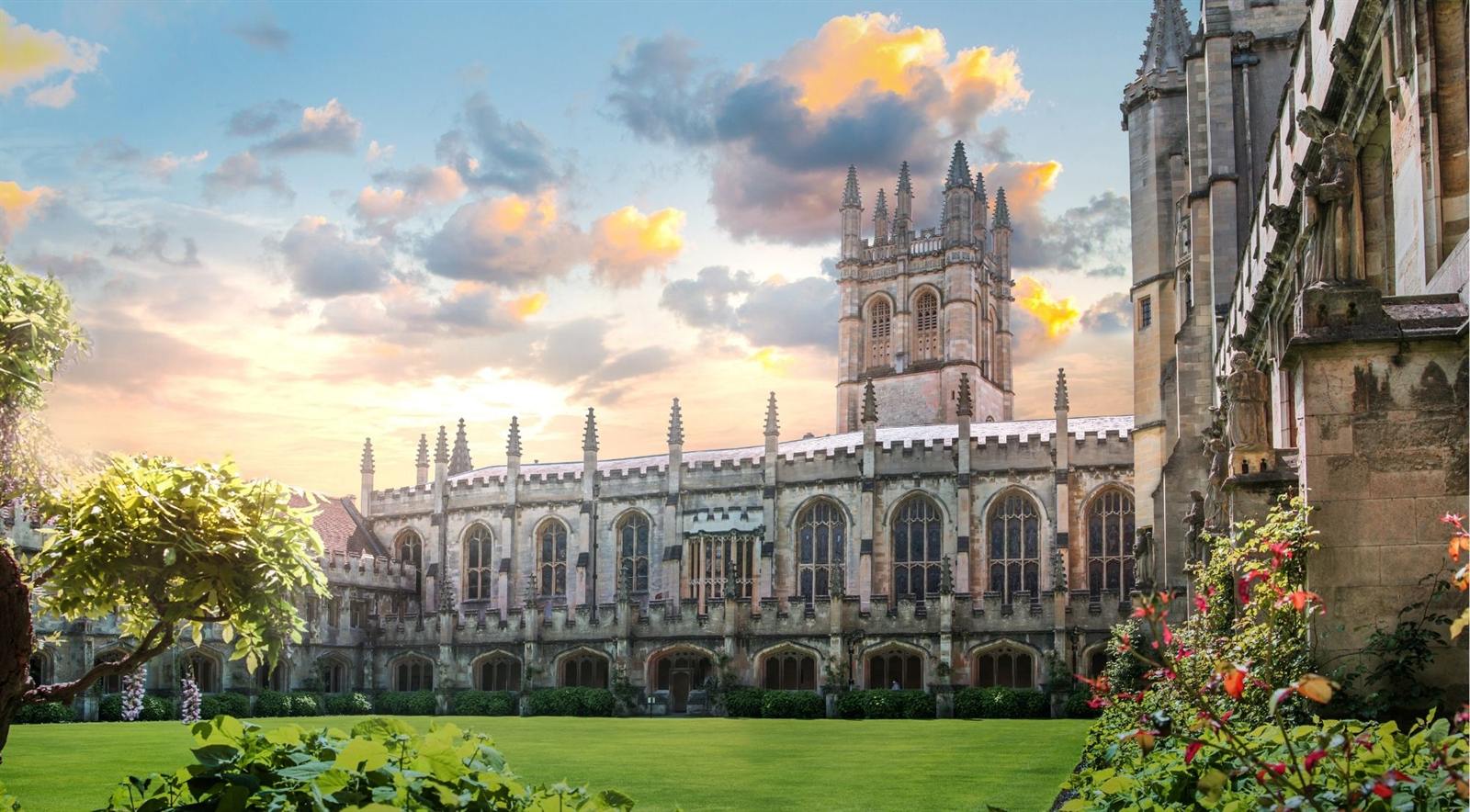
Oxford and the Cotswolds are for many visitors the finest single day out England offers — not one UNESCO-listed sight or one charming village, but a complete portrait of the country in miniature. A morning among medieval libraries and an afternoon in honey-stone villages, all within 20–35 miles of each other and knitted together by the same Cotswold limestone and the same wool-trade history. For more on either destination on its own, see our dedicated Oxford day trip guide and our guide to Cotswolds day trips from London.
Why Oxford and the Cotswolds make the perfect pairing
There are three genuine reasons this combination works better than either place on its own.
Geography. Oxford sits right on the eastern edge of the Cotswolds National Landscape — the largest National Landscape in England and Wales at 787 square miles. Burford, the gateway Cotswolds town, is about 19 miles west of Oxford; Bibury is roughly 30 miles. Better still, the two areas share the same Cotswold limestone belt. Stone from quarries at Taynton, near Burford, was carted to Oxford to build its colleges for more than 800 years — that honey-coloured stone you admire in Oxford's college quads is the same oolitic Jurassic limestone that builds Bibury's Arlington Row.
Contrast and complement. Oxford gives you the city — crowds, colleges, bookshops, a thousand years of intellectual life packed into a few cobbled streets. The Cotswolds give you the countryside — space, silence, dry-stone walls and a different pace entirely. Each makes the other more vivid. The hush of a Cotswolds lane lands harder after a morning in a bustling university city.
History spanning a millennium. Teaching existed at Oxford in some form in 1096, making it the oldest university in the English-speaking world. Bibury's Arlington Row dates from 1380, and the Cotswold wool trade that built the villages also financed many Oxford colleges. The day tells a single, coherent story about how wealth, faith and learning shaped this corner of England.
More Day Trips and Tours Near Oxford and the Cotswolds
If Oxford and the Cotswolds have whetted your appetite, there is plenty more nearby. Consider a Bath and Stonehenge day trip — Bath is barely 40 miles south of the Cotswolds — or a visit to Blenheim Palace, just outside Woodstock near Oxford. The Harry Potter Warner Bros. Studio Tour at Leavesden, Stratford-upon-Avon (Shakespeare's birthplace, on the northern edge of the Cotswolds) and Windsor Castle all make excellent additions to a longer stay. These picks from GetYourGuide update automatically.
Oxford first or Cotswolds first? Our honest view
Our clear recommendation, after running this trip many times: Oxford in the morning, Cotswolds in the afternoon.
Practical. Oxford is further from the deepest Cotswolds villages than Burford or Bibury are from London, so it makes geographic sense to stop in the city on the way west, then drive on into the countryside rather than doubling back.
Experiential. Starting in a city gives the day structure and momentum; the countryside then feels like a release and a reward. The transition from Oxford's academic grandeur to Bibury's quiet lanes is one of the most satisfying moments of the whole trip — you can feel your shoulders drop.
Crowd logic. Oxford's headline sights — the Bodleian, Christ Church, the Radcliffe Camera — are best seen in the morning, before the tourist coaches have fully arrived. Meanwhile, Cotswolds honeypots like Bibury and Bourton-on-the-Water are at their most peaceful in the late afternoon, once the midday coach parties have moved on.
One caveat: in winter, when Cotswolds light fades by late afternoon, the reverse can work better — start in the villages while the light lasts and finish in Oxford, where the sights are lovely after dark.
The Oxford morning — what to see and how long to spend
Plan on roughly 2.5 to 3 hours in Oxford, then move on. The good news is that Oxford is wonderfully walkable: everything below sits within 10–15 minutes' walk of everything else.
Radcliffe Camera and Radcliffe Square
Start at the Radcliffe Camera. The circular domed reading room, built between 1737 and 1749 to a design by James Gibbs, is the geographical and visual heart of Oxford. The square around it — framed by the Bodleian, All Souls, the University Church of St Mary the Virgin and Brasenose — is the finest academic ensemble in England. Arrive early, before the tour groups; the morning light on the Camera's pale stone is one of the two golden-hour moments of the whole day.
The Bodleian Library
Right beside the Camera, the Bodleian Library is one of the oldest in Europe, formally opened on 8 November 1602. Beneath it, the Divinity School — built between 1427 and 1483, the oldest purpose-built teaching room in the university — served as the Hogwarts hospital wing in the Harry Potter films, while Duke Humfrey's Library above became the restricted section. The interior is reached only on guided tours, which should be booked in advance. Harry Potter fans should also visit New College, whose medieval cloisters appear in Goblet of Fire — see our guide to Harry Potter tours from London for more filming locations.
Christ Church College
Christ Church was founded in 1525 by Cardinal Thomas Wolsey and refounded in 1546 by Henry VIII. Its Great Hall inspired the Hogwarts Great Hall, and the fan-vaulted Bodley staircase — its vaulting installed in 1638 — appears in the films as the stairway where Professor McGonagall greets the first-years. Christ Church charges entry and keeps specific opening hours, so check before you travel.
The Covered Market
For a pause before heading west, the Covered Market — officially opened on 1 November 1774 — is home to dozens of independent traders and is perfect for a coffee, a pastry or a famous Oxford sausage roll. Give it 20 minutes before leaving the spires behind.
Lunch — where to eat between Oxford and the Cotswolds
You have two good options. You can eat in Oxford before leaving — the Covered Market works well for a quick lunch. Or, better, eat in Burford, the first significant Cotswolds town on the route from Oxford, about 19 miles west. Burford's steep High Street has excellent lunch options including the Bull at Burford (records dating to 1536, with original stables still around its courtyard) and the Angel at Burford (a 16th-century coaching inn on Witney Street), along with several independent cafés. Arriving in Burford for lunch is also a perfect introduction to the Cotswolds: you turn up hungry, the High Street slopes beautifully down towards the River Windrush, and a pub lunch in a honey-stone inn sets exactly the right tone for the afternoon. Our clear preference: eat in Burford.
The Cotswolds afternoon — which villages to visit
With an afternoon starting from Oxford and Burford, stick to the central Cotswolds, which are closest to your route and the most rewarding per mile. Our recommended sequence: Burford → Bibury → Lower Slaughter → Bourton-on-the-Water, adjusted to the time you have.
Burford
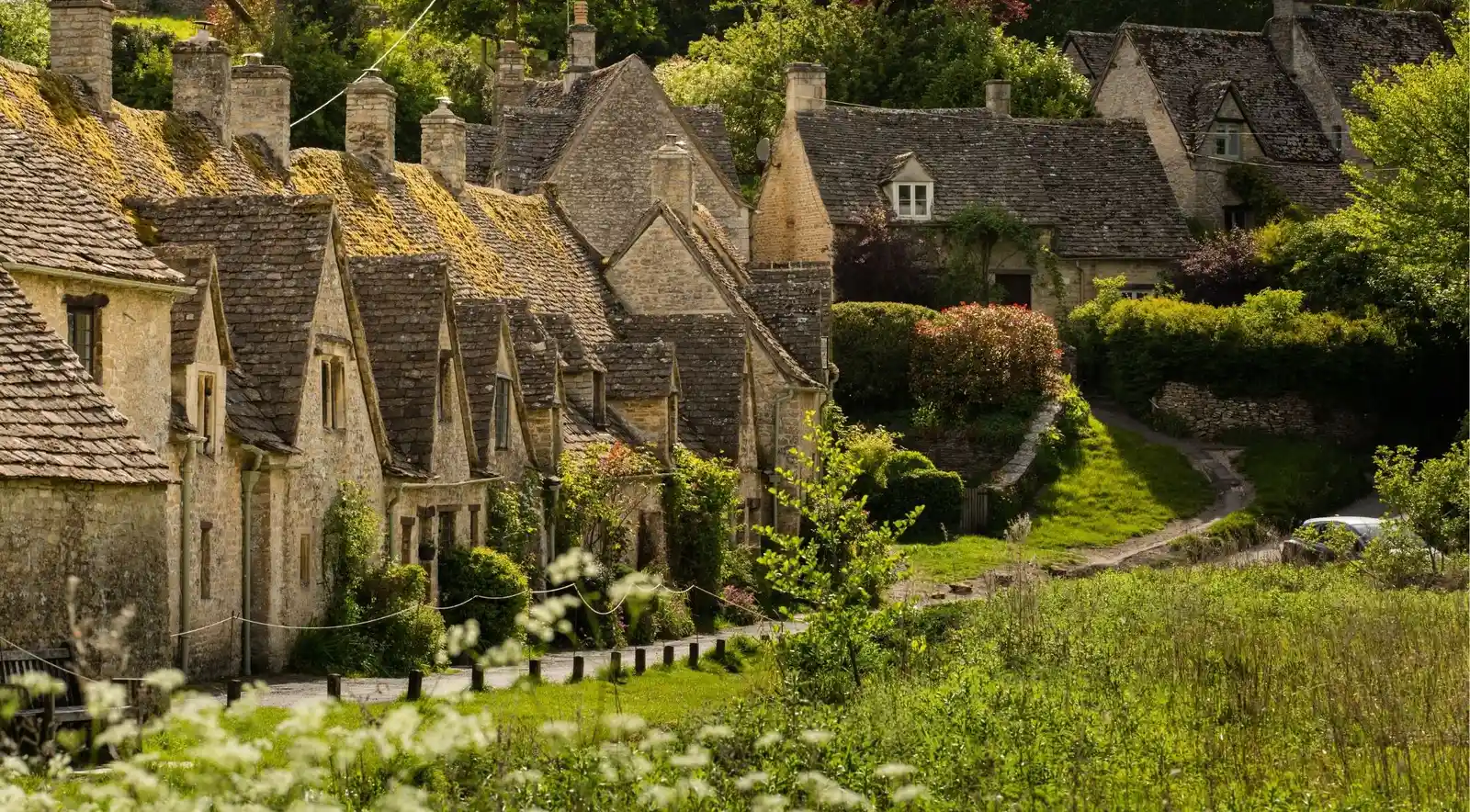
"The gateway to the Cotswolds" is worth half an hour even if you've already eaten there. Wander the steep High Street of honey-stone shops and look into the Church of St John the Baptist — Grade I listed, and the site where three Leveller soldiers were shot in the churchyard on 17 May 1649 on Oliver Cromwell's orders, an event still marked each year as Levellers' Day.
Bibury
Bibury is the jewel. William Morris called it "the most beautiful village in England" in a letter of 8 August 1880. Arlington Row, built around 1380 as a monastic wool store and converted to weavers' cottages in the 17th century, is so iconic it was featured on the inside cover of UK passports. Arrive here as late as your schedule allows — in early-evening light in spring and summer, or at golden hour in autumn, it is genuinely transcendent.
The Slaughters
Upper and Lower Slaughter are linked by a gentle riverside path along the River Eye, and sit off the main coach-party track. Lower Slaughter has its Old Mill, a 19th-century working flour mill with a distinctive brick chimney. Upper Slaughter is a "doubly thankful village" — one of only 14 in England and Wales to have lost no men in either World War.
Bourton-on-the-Water
"The Venice of the Cotswolds," with its low stone bridges stepping across the River Windrush. The Model Village, built between 1936 and 1940 at one-ninth scale, is genuinely family-friendly and best visited in the late afternoon once the crowds thin.
Stow-on-the-Wold
The highest town in the Cotswolds makes a good final stop before the drive back to London. Seek out the famous north door of St Edward's Church, flanked by two ancient yew trees, and browse the antiques shops and tea rooms around the market square.
Private tour or small-group — which suits this combination?
A small-group tour is sociable, excellent value and led by an expert guide, with the group typically capped around 16 people. It is a great fit for solo travellers and couples. The Oxford and Cotswolds itinerary works beautifully in this format because the guide handles all the timing, the village sequence and the logistics — you simply enjoy the day.
A private tour is door-to-door and fully bespoke. It is ideal for families (children can be fed and rested at their own pace), for couples who want privacy, and for anyone who wants maximum flexibility — linger an extra hour at Christ Church, skip a village that doesn't appeal, or add a detour down a hidden lane. The private format also lets the guide adapt in real time: if Bibury is unexpectedly quiet, you stay longer; if a coach party has just arrived, you slip ten minutes down the road to the Slaughters instead.
Honestly, the Oxford and Cotswolds combination is the itinerary where a private tour makes the most difference, because the two areas — and the transition between them — reward flexibility more than almost any other day trip. Not sure which suits you? Compare our full range of Cotswolds tours from London, including private options.
Practical tips for the Oxford and Cotswolds day trip
Book Oxford sights in advance. Christ Church has specific opening hours that change with college events and exam season, and the Bodleian's interior tours regularly sell out — book both online before you travel. Don't try to drive yourself into Oxford: parking is notoriously limited and expensive, and the one-way systems eat into your morning.
Wear comfortable shoes. Both Oxford — with its cobbles and college quads — and the Cotswolds — with village lanes and riverside footpaths — reward proper footwear. Start early from London: for a combined day, departing by around 8–8.30am gives you a full 2.5–3 hours in Oxford and an unhurried afternoon in the Cotswolds.
May and September are the sweet spots for this combined trip — good weather, manageable crowds and the landscape at its most attractive. In winter, check that you'll have enough afternoon light in the villages — sunset in January is around 4.15pm, so plan the Cotswolds leg accordingly.
Mind the light for photography. The two golden-hour moments of this day are the morning light on the Radcliffe Camera and the late-afternoon light on Bibury — plan around them and you'll come home with the best shots of the trip.
For a full breakdown of the best months and conditions for Cotswolds visits, see our best time to visit the Cotswolds guide. And if you're choosing between an Oxford-only or an Oxford-plus-Cotswolds day, our dedicated Oxford day trip guide has everything you need to decide.