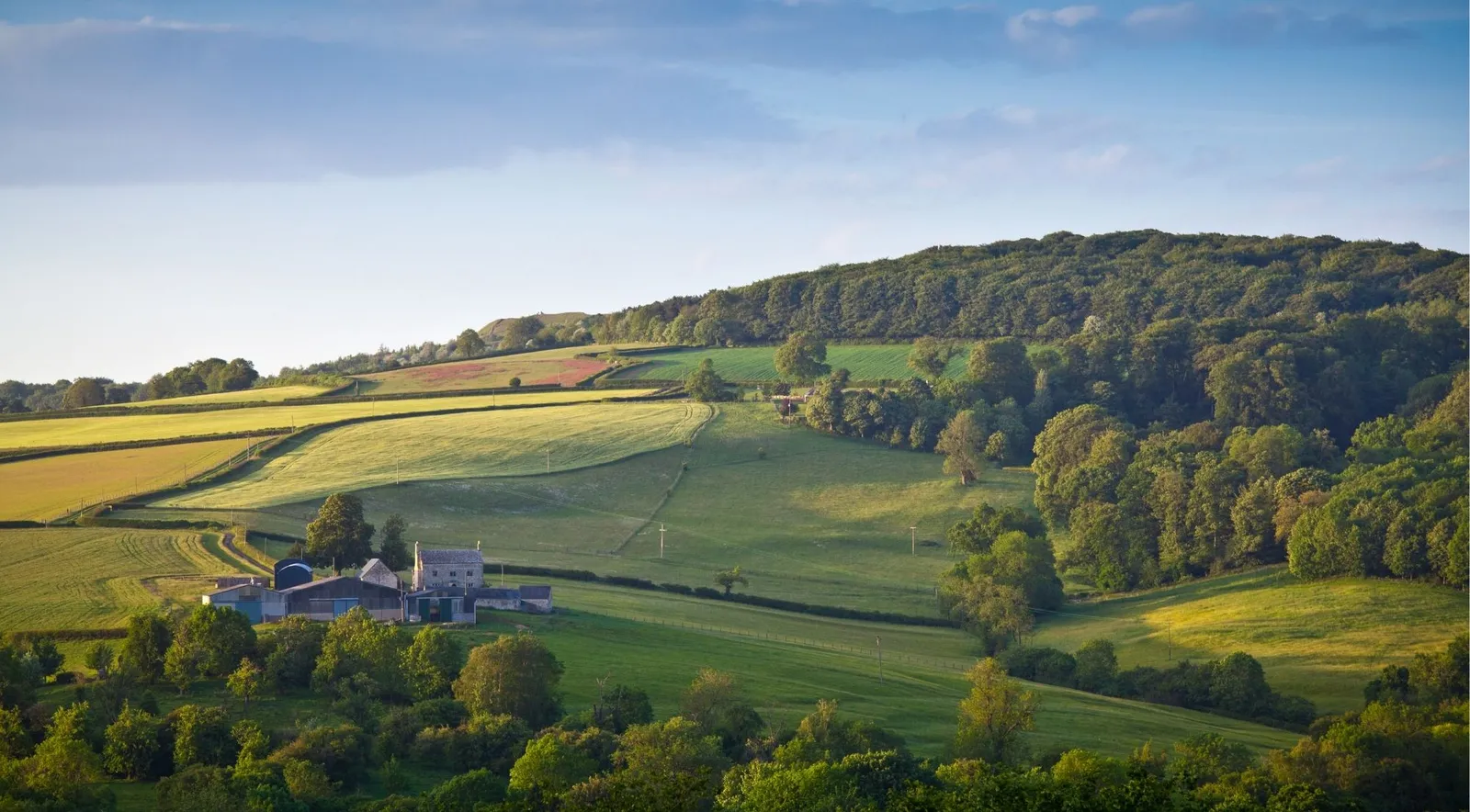
We get asked "when should I go?" more than any other question, and our honest answer is never "any time is great!" The Cotswolds is genuinely a year-round destination, but it has wildly different personalities across the seasons: the blossom-heavy hush of spring, the postcard-busy crush of July and August, the amber calm of autumn, and the frosty, underrated solitude of winter. This is the largest National Landscape in the UK — 787 square miles of honey-stone villages and limestone hills — and it draws over 23 million visitors a year, which is exactly why when you come matters so much. Below is our considered, month-by-month verdict.
Quick guide — best and worst times at a glance
| Month | Crowds | Weather | Our verdict |
|---|---|---|---|
| January | Very low | Cold (~8°C) | Quiet and atmospheric — a hidden gem |
| February | Low | Cold (~8–9°C) | Underrated — snowdrop season |
| March | Low | Unsettled (~11°C) | Quiet but unpredictable |
| April | Rising | Mild (~14°C) | Lovely — first real warmth |
| May | Moderate–high | Mild (~17°C) | One of the best — book ahead |
| June | High | Warm (~19–20°C) | Arguably the most beautiful |
| July | Very high | Warm (~22°C) | Busy but beautiful — book well ahead |
| August | Peak | Warm (~21–22°C) | Busiest of all — plan everything |
| September | Moderate | Mild (~18°C) | Our top pick — go now |
| October | Low–moderate | Cool (~14°C) | Spectacular and quieter |
| November | Low | Cool (~10°C) | Quiet — wrap up warm |
| December | Moderate (festive) | Cold (~8°C) | Magical but festive-busy |
Spring in the Cotswolds (March, April, May)
Spring is when the Cotswolds wakes up, and it does so unevenly — which is part of the charm.
March is the gambler's month. The weather is genuinely unpredictable, with mild daytime highs of around 11°C but the constant possibility of a cold, wet day. The reward is solitude: this is one of the quietest months of the year. The last snowdrops give way to early blossom, the fields fill with new lambs, and you can stand on a village green with barely another soul around. Some smaller attractions are still on winter hours, so check before you travel.
April brings the first real wave of visitors, especially over Easter. It's a beautiful time to walk: temperatures climb to around 14°C and the woodland floors begin their most famous act. Peak bluebell season runs from late April into mid-May, and woods such as those at Dover's Hill near Chipping Campden and the beech stands around Painswick fill with that unmistakable blue haze.
May is the Cotswolds showing off — peak blossom, wildflower meadows coming into their own, and evenings that stretch out beautifully. The half-term break brings families, so it's busier than April, but rarely overwhelming. Our verdict: April and May are wonderful, March is for those who value peace over certainty — all three reward anyone willing to bring a waterproof.
Summer in the Cotswolds (June, July, August)
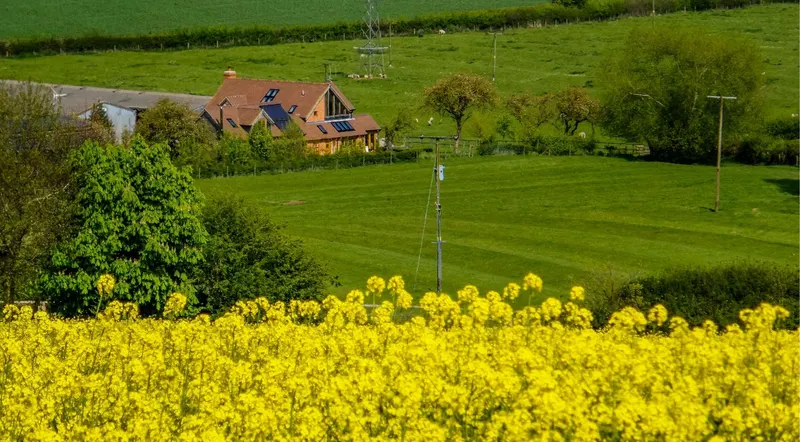
We'll be honest: summer is the most beautiful and the most difficult time to visit. This is peak season, and the most famous "honeypot" villages — Bibury and Bourton-on-the-Water above all — can feel genuinely overwhelmed on a warm weekend. Bourton-on-the-Water, whose resident population is just over 3,000, receives upwards of 230,000 visitors a year. None of that means you should avoid summer — it means you should plan.
June is, to our mind, arguably the most beautiful month of all: the longest days of the year, wildflowers everywhere, and warmth without the sticky peak of August. It's also when Chipping Campden hosts the historic Cotswold Olimpicks at Dover's Hill — a wonderfully eccentric survival first staged in 1612.
July is when the school holidays begin and the villages hit their busiest. Our advice is simple: arrive early. Be at Bibury before 9am and you'll have Arlington Row almost to yourself.
August is peak season — book everything months ahead. The villages are busy, but the countryside beyond the honeypots is far quieter, and the walking is superb. Our honest verdict: summer is wonderful, but it rewards planning and ideally a small-group tour or private car to escape the coach-party rhythm.
Autumn in the Cotswolds (September, October, November)
This is the richest season, and our favourite.
September is our top pick of the entire year. The school holidays are over by the first week, so the crowds thin dramatically just as the landscape is at its most flattering. There's a harvest atmosphere in the air, the light turns golden, and it's still warm enough — highs around 18°C — to walk comfortably. The stretch of the Cotswold Way through the ancient beech woodland between Painswick and Cooper's Hill is spectacular as the canopy turns copper and gold.
October brings peak autumn colour, with mid-October typically the best window. Misty mornings settle over the valleys, and the famous arboreta blaze: Westonbirt, near Tetbury, hits its peak from mid-October into early November and is internationally famous for its Japanese maples.
November is the quietest of the autumn months. Some smaller attractions close or cut their hours, so check ahead. As the month ends the Christmas season flickers into life, with Bourton-on-the-Water's celebrated floating Christmas tree lit from the last weekend of November. Our verdict: September and October are, for our money, the finest weeks of the entire Cotswolds year.
Winter in the Cotswolds (December, January, February)
Winter is the Cotswolds' best-kept secret, and we'll happily argue the case.
December is festive and genuinely magical. Bourton-on-the-Water's Christmas tree stands in the River Windrush, lit from late November to Epiphany. Christmas markets appear across the region — Moreton-in-Marsh's draws crowds to its broad High Street. A frosty December morning in Bibury, with smoke curling from the chimneys of Arlington Row, is one of the most beautiful sights in England.
January is the quietest month of all — post-Christmas solitude, the lowest accommodation prices of the year, and a stark, bare-branched beauty. Towards the end of the month the first snowdrop walks begin at gardens such as Snowshill Manor and Hidcote.
February is snowdrop season at its peak. Colesbourne Park — called "England's greatest snowdrop garden" — leads the field; Painswick Rococo Garden carpets its woodland slopes with around five million snowdrops. Our verdict: winter is the Cotswolds' best-kept secret — fewer visitors, honest prices, and a beauty genuinely different from the summer version.
The best villages to visit by season
A village that's a joy in February can be a trial in August, so we pair our recommendations to the calendar.
In spring, head for Chipping Campden, where blossom softens the long, curving High Street; and Bourton-on-the-Water, genuinely lovely before the summer crush.
In summer, our strongest advice is to avoid Bibury and Bourton on weekends. Instead, visit Snowshill, with its Arts and Crafts manor; the unspoilt Minster Lovell; and the Slaughters — Upper and Lower — linked by a gentle riverside path the coach parties rarely reach.
In autumn, make for Painswick — the "Queen of the Cotswolds" — whose St Mary's churchyard is celebrated for its 99 yew trees. Add Stow-on-the-Wold for its antiques shops and market-square atmosphere, and Burford, whose steep, leaf-lined High Street is one of the finest in the region.
In winter, Bibury in frost is unbeatable if you arrive before 8am; Bourton-on-the-Water comes alive with its riverside Christmas lights; and Chipping Campden offers as good a dose of Christmas atmosphere as anywhere in the Cotswolds.
Cotswolds weather — what to expect and what to pack
The Cotswolds has a temperate maritime climate, which is a polite way of saying it can rain at any time. Spring sits at a mild 10–15°C, summer at a comfortable 18–22°C (July is the warmest), autumn cools from around 16°C down to 10°C, and winter hovers between 3°C and 8°C. The region receives roughly 790mm of rain a year, spread fairly evenly — there is no genuinely dry season, so a waterproof is always sensible.
Pack layers, a proper waterproof jacket, and sturdy walking shoes. Bring sun cream from June to August. And remember that while the Cotswolds is not alpine — the highest point is Cleeve Hill at 330 metres (1,083 feet) — the hills can be surprisingly cool and exposed once you're up on the escarpment.
When to go for a day trip from London
For day-trippers from London, the single most important rule is this: midweek beats weekends, every time. A Tuesday or Wednesday in any season will be calmer than a Saturday, and a spring or autumn weekday is the genuine sweet spot, combining good light, manageable crowds and reasonable prices. For the full how-to, see our guide to Cotswolds day trips from London.
If you must go in high summer, the format of your trip matters enormously. A small-group tour or a private car-and-driver gives you the flexibility to arrive at the famous villages early, before the coaches roll in. In winter, the priority shifts to checking attraction opening hours before you travel. Our honest steer is that private car tours are the best format for off-peak visits, because you can adapt the itinerary in real time.